Sixty years on a thousand acres.

How a school teacher built a sporting estate in 1967. How his son came back from Alaska to scale it. How a family is handing it forward sixty years later.

The story, year by year.

Tap a year.

Hunting Hills, 1967

Hunting Hills opens.

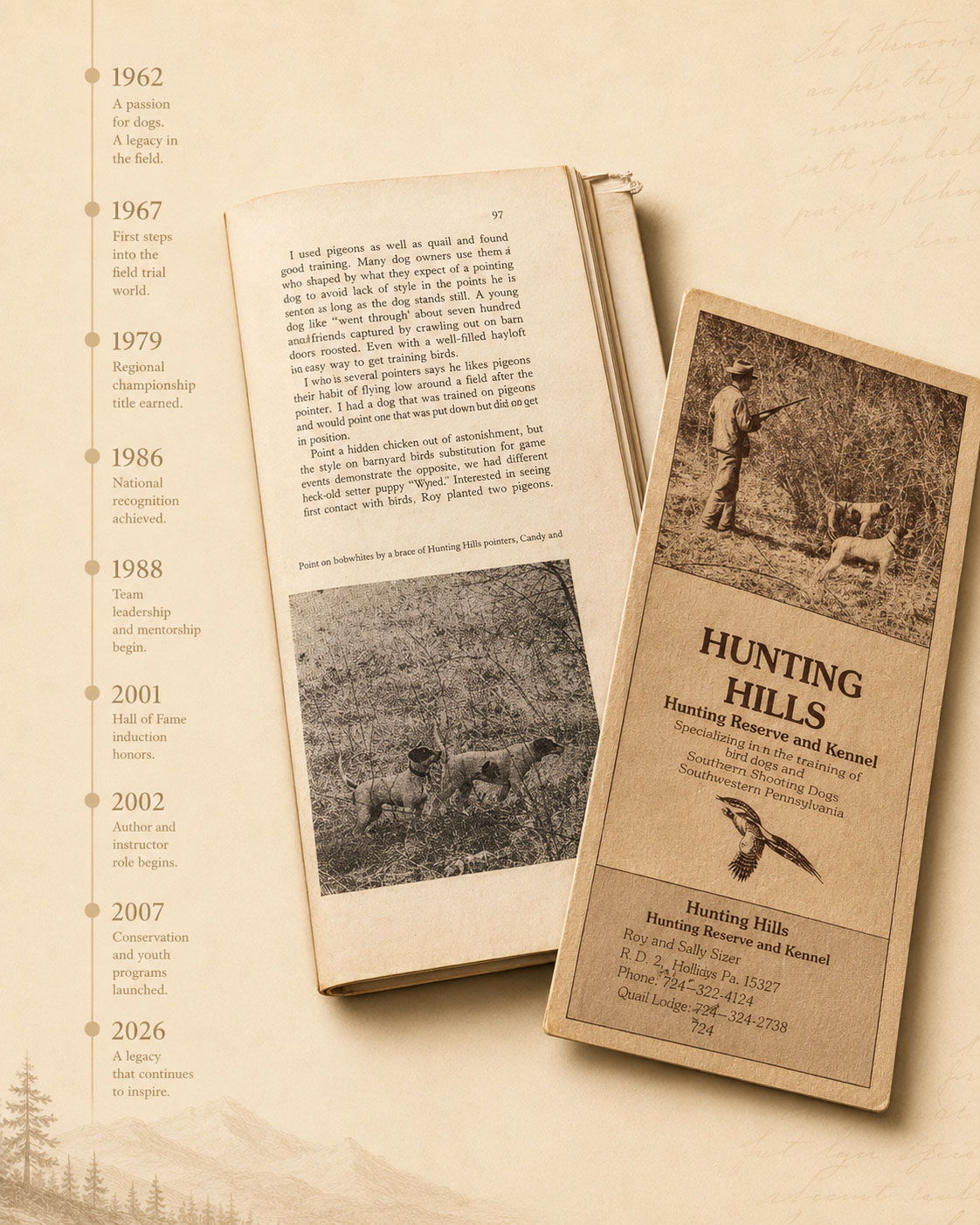
Pennsylvania introduces the shooting preserve license. Roy and Sally Sisler take it and open Hunting Hills. Sally handles the books. Roy brings in the customers and runs the dogs.

CHAPTER ONE · 1967

A school teacher with summers off.

Roy Sisler taught industrial arts at Waynesburg Central High, with summers off and a way with bird dogs. He grew up hunting in a family of eight, back when hunting put food on the table. He went to West Virginia on a wrestling scholarship and came out a three-time All-American.

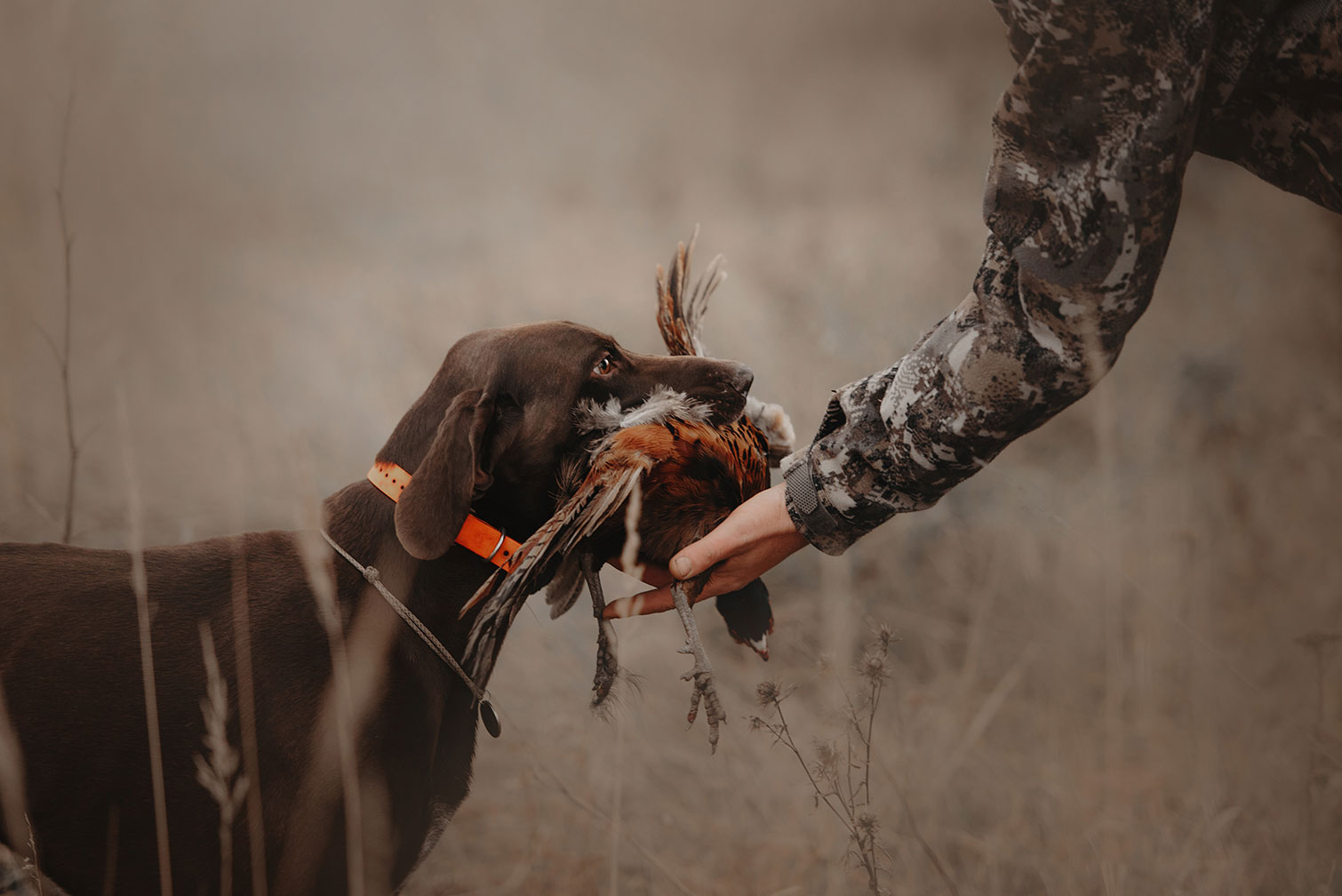
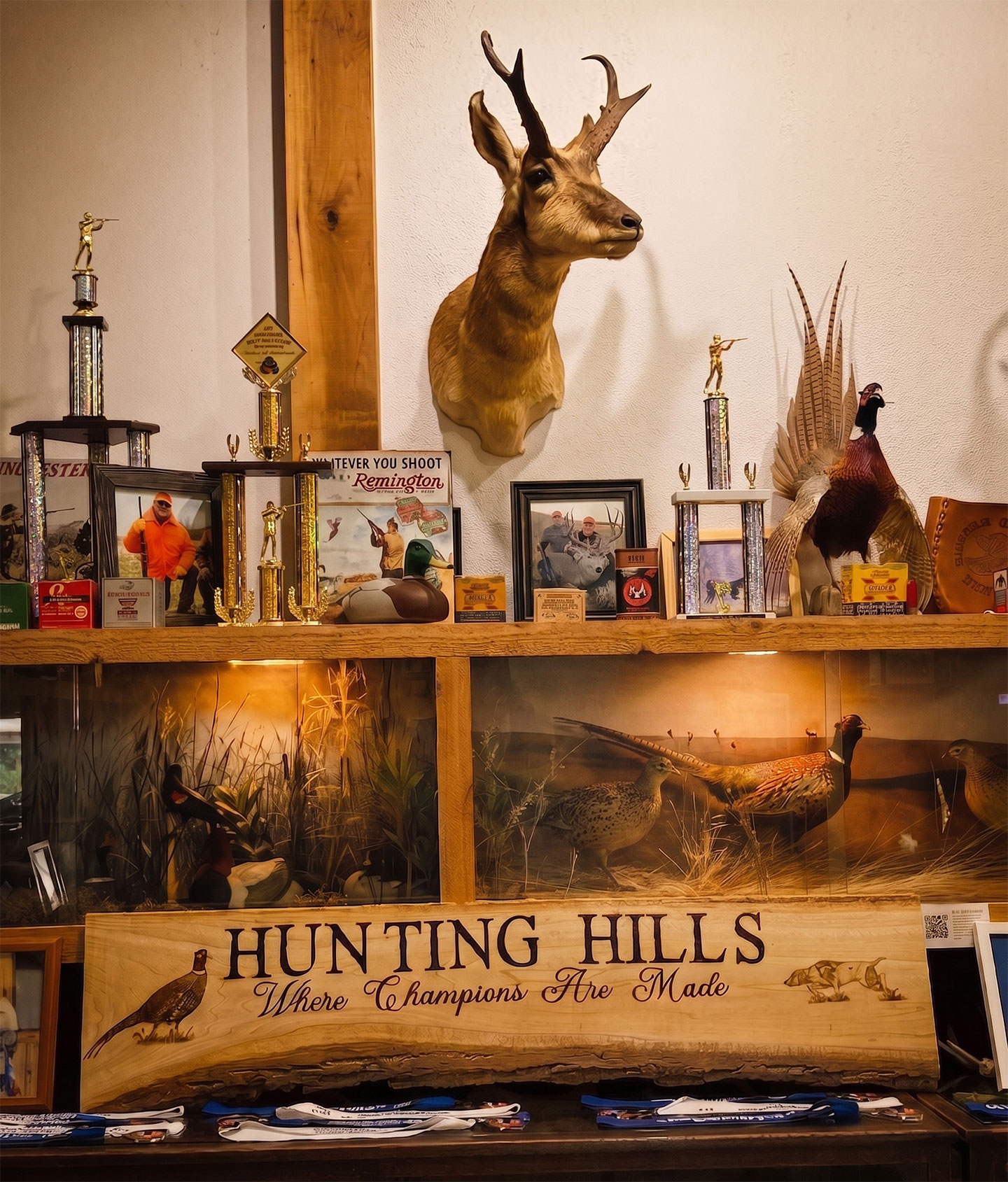
He approached bird dogs the same way he approached the mat. He campaigned them at field trials, won the first one he entered in 1962, and was named a two-time National Birdhunters Association Top Handler with the top open shooting dog in the country.

In 1967, Pennsylvania introduced the shooting preserve license. He took it. His wife, Sally, handled the books. He brought in the customers and ran the dogs. In 1986 he built one of the first sporting clays courses in the country.

CHAPTER TWO · 2001

Ras came back from Alaska to bring structure.

The current property was an old strip mine in Greene County. The family bought it in 1979 and reclaimed it by hand. Ras worked it as a teenager, then left for sixteen years in Alaska to build a guiding business.

His father came up to hunt brown bear in Alaska about ten years in. On that trip, his father asked him to come home. Ras held the line for five more years to build equity, sold the business, and returned in 2001.

His father had built the demand. Ras built the systems. He repositioned the bird program around wild pheasant hunting on purpose, turned the events business toward fundraising, and the natural gas boom in Appalachia arrived not long after.
CHAPTER THREE · NOW

Sixty years in, and handing it forward.

Ras had no family generation behind him. He started planting seeds with a customer who had been coming to Hunting Hills for years. The conversation took four years to become a real plan.

The plan is the same one a school teacher had in 1967. Build something that lasts. Same standards. Same crew. Same answer to every customer who walks in.

The land has a story too.

Two brothers fought in the Revolutionary War and received land in what was then the western frontier. They are buried in a cemetery on the property that dates to the 1700s. A maple tree planted near it has stood over the property for generations.

The land became a strip mine in the 1970s. The family bought it in 1979 and started reclaiming it. Ras and his father planted switchgrass, which holds birds, grows on poor soil, and stays in for twenty to thirty years.

A thousand acres that were scraped raw fifty years ago are now one of the most respected sporting estates east of the Mississippi. The land does its work without saying a word.

See it for yourself

181 Hunting Hills Road, Dilliner, PA 15327
Phone: (724) 324-2738
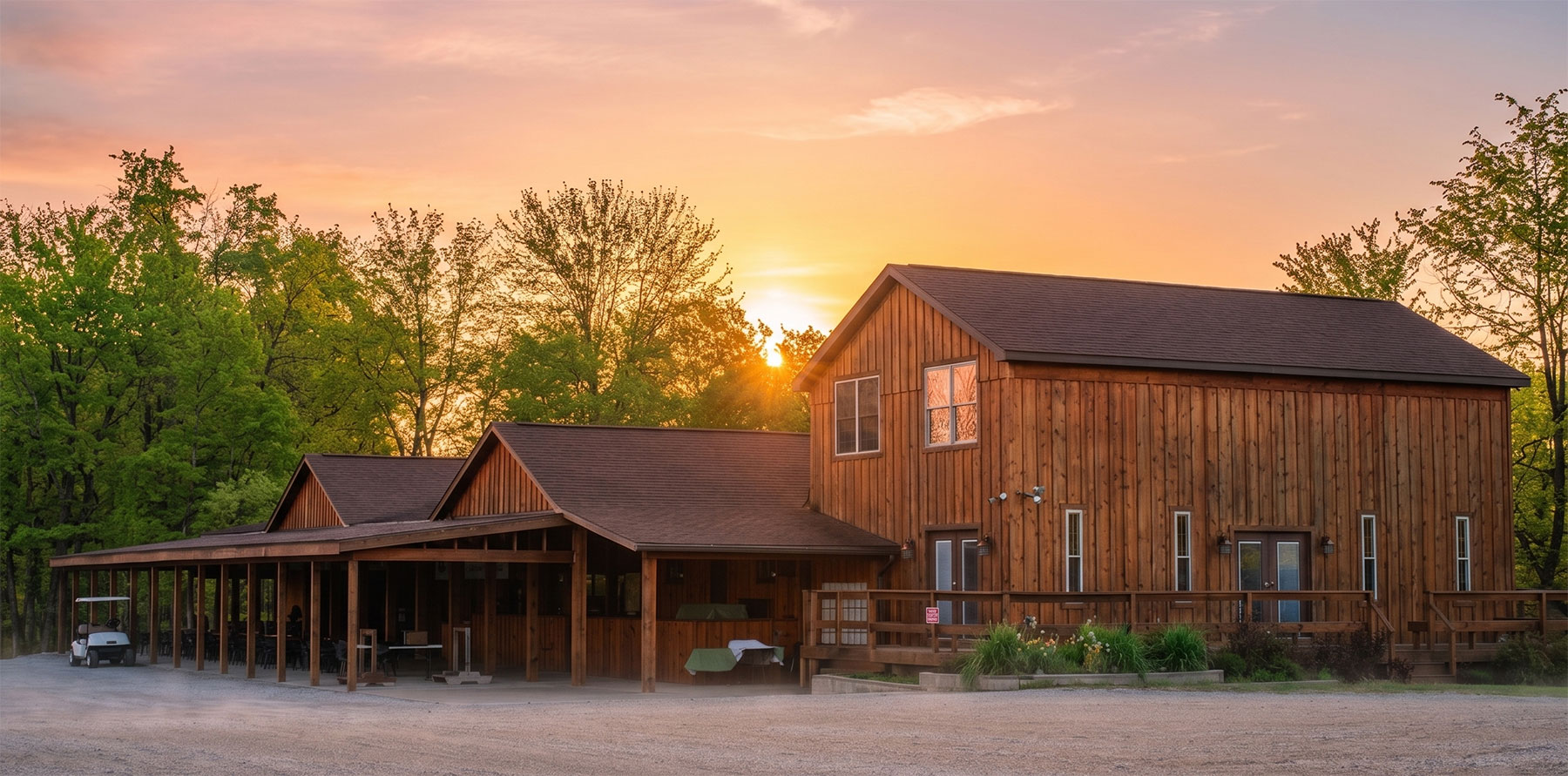
The course was built by hand from a reclaimed strip mine. Sunday public shoots are the easiest day to come see for yourself.

One family.
Two generations.

1967
The year it
all started
60
Years run by
the same family
1,000
Acres of
sporting estate

Time flies?

We disagree. Around here, only the birds do.
Send a note or call the lodge at (724) 324-2738.
Planning a visit? Sign your waiver ahead of time so you're ready to shoot when you arrive.
Sign the Waiver
Subscribe
And get the dispatch from the property. Public shoot dates, hunt openings, and what's in season.
© 2026 Hunting Hills. All rights reserved.